
From the River to the Community: Minga, Art, and the Spirit of San Pedro
By: Waterkeeper Alliance
What Does it Mean to be United by a River?
At the 2026 Waterkeeper Alliance Global Conference in Quito, Ecuador, Waterkeepers drew inspiration from an ancient tradition that offered a deeper understanding of their shared commitment to protecting water. A Kichwa word, minga refers to a practice of community and collective work deeply rooted in the ancestral cultures of the Andean peoples of South America. It describes a way of addressing community needs through shared effort, with each person contributing their skills, knowledge, and abilities for the benefit of the whole community.
For Waterkeepers, the community workday on the San Pedro River offered an opportunity to experience this tradition firsthand. It was a day of work, learning, creativity, shared meals, ceremony, and connection with nature—an unforgettable experience that will remind us for a lifetime that protecting water is, ultimately, a collective effort.
Taking the Conference to the River
After two days of presentations, workshops, and discussions, Waterkeepers left the conference rooms and headed to the San Pedro River.
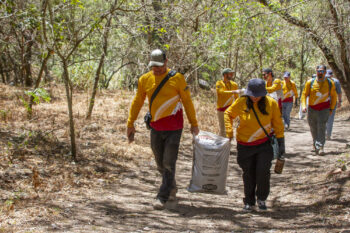 Participants took part in cleaning the river, removing invasive plant species, creating artwork from collected recyclable materials, birdwatching, and contributing to other activities focused on the river and its ecosystem. The work was hands-on, but the experience was much more than completing a list of projects. Working together gave Waterkeepers from different countries and cultures the opportunity to experience a shared responsibility: caring for the body of water in front of them.
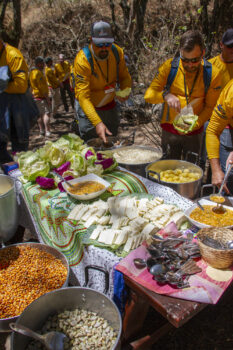
Once the work was finished, everyone gathered around a communal table (pambamesa in Quechua) to share a variety of local foods. The organic waste was taken to be composted, reinforcing a sense of responsibility towards nature.
Connecting Waterkeepers Through Ceremony
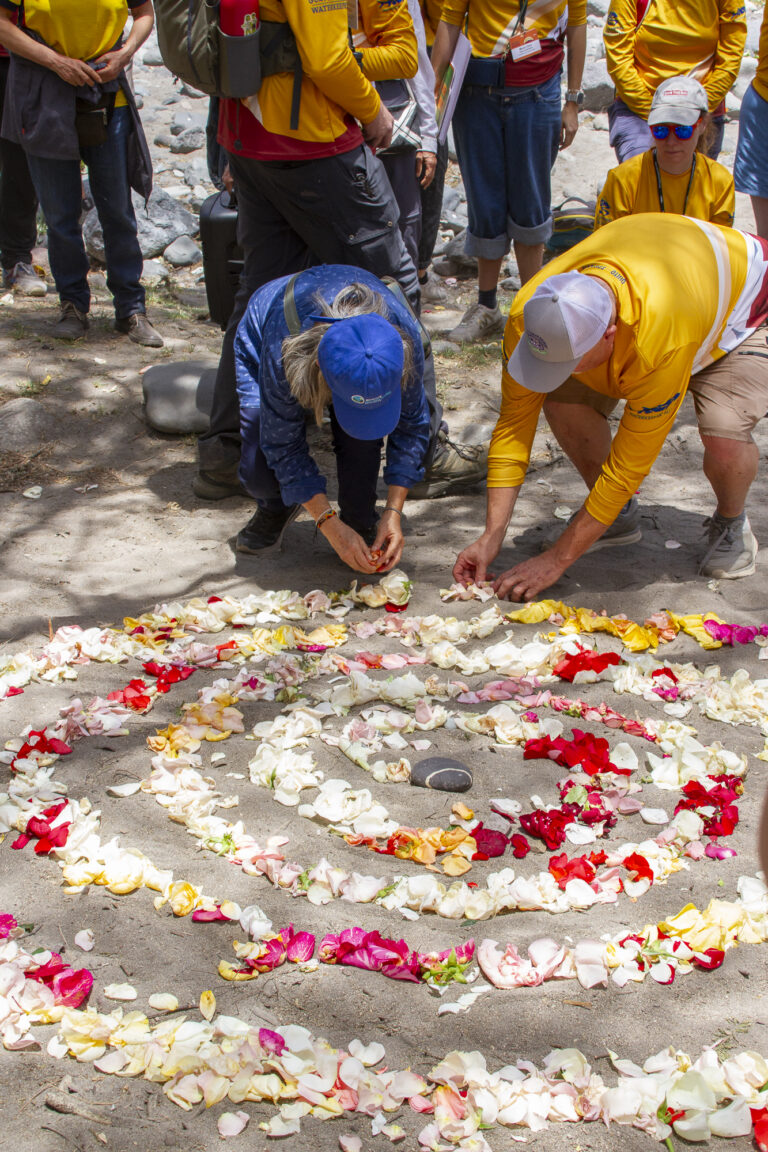
After a day of work along the San Pedro, Waterkeepers gathered for a ceremony of gratitude to the river. As local musicians played traditional music on Indigenous instruments, river stones and flower petals were arranged in a spiral to honor the many bodies of water represented and offer blessings for them all.
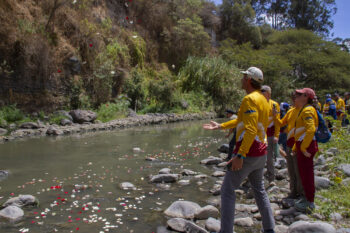 Participants then carried their petals to the riverbank and cast them into the current, carrying their good intentions to the San Pedro River and to rivers, streams, and oceans around the world. The symbolism was simple and powerful: different waterways, different communities, different challenges, all connected by water. For a movement spanning countries and continents, the ceremony offered a tangible and moving expression of that connection.
A River Woven Through the Conference
Throughout the conference, Waterkeepers learned about Quito’s relationship with its waters, local river protection efforts, and the rights of nature established by Ecuador’s Constitution.
Throughout the week, the meeting spaces showcased works by the citizen collective Espíritu del Río, which highlighted Quito’s hidden rivers and the relationship between water, culture, community, and its spaces.
The exhibition included a tapestry created by community members using recycled materials, under the direction of artist Camola Valarezo. Young participants in the collective’s photography lab created “Symbols of the River,” while photographs of Samayuio (representing the Spirit of the Quito River) offered a different perspective on the city’s waterways. The exhibition also featured Samayuio’s augmented reality map, revealing one of Quito’s ancient ravines. Conference photographer Mónica Aguilar curated the photographic exhibitions, creating a visual connection between the event and Quito’s waterways.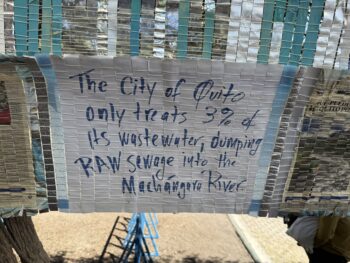
The project demonstrated how art can help bring hidden waterways to light and how storytelling can invite people to see familiar places through a different lens. To learn more about this citizen collective and its work, visit espirituderio.com.
The artwork and the minga offered a complementary lesson: protecting ecosystems isn’t just about laws, policies, science, or enforcement. It’s also about community involvement and the relationships people build with the spaces they call home.
The evening continued with a very special Latin party, where attendees enjoyed live music and dancing. After a day of working together on the riverbank, this celebration was another expression of community: simply coming together to enjoy each other’s company and celebrate local culture.
Carrying the Spirit Home
The experience on the San Pedro River offered Waterkeepers something that couldn’t be replicated in a conference room. It created a space for learning by doing and for experiencing the Latin American tradition of collective action.
 This is a lesson that must be passed down from generation to generation. Each Waterkeeper returns to a different river, lake, coastline, or watershed. But the fundamental responsibility remains the same: to understand the body of water, work with the community, protect the ecosystem, and engage others in the effort.
The minga on the San Pedro River made that connection visible. Cleaning the river became a shared experience. A communal meal became an act of unity. Art brought hidden waterways to light. A ceremony connected waterways across continents.
And for one day in Ecuador, water defenders from around the world gathered to care for a river while honoring their own rivers across the planet.
A special thank you to the Rich Family Foundation for supporting this meaningful experience and helping make it possible.
The río San Pedro cleanup minga was carried out by the Colectivo Rescate del Río San Pedro, whose community team of 10 members coordinated and managed all activities on site. The effort was strengthened by three allied organizations: Huella Verde, which provided reusable tableware; La Cuica Cósmica, which managed composting; and Wiwa Parque Refugio de Vida Silvestre, which supported the biodiversity activity guide. Food was provided by a member of a neighboring ancestral community along the river, complemented by locally sourced Ecuadorian fruit, while music was coordinated with Taller la Bola, and event coverage was supported by Minga para la Pachamama.
In total, the cleanup collected 155.11 kg of waste, broken down into 49.7 kg of plastics, 100.41 kg of textiles, and 5 kg of other materials. Permits and waste removal were coordinated with the corresponding offices of the Municipality of Quito, and the event took place in an ecological park managed by the Municipality.
This was the 33rd minga held at different points along the river, part of a methodology built over five years by the members and organizations of the Colectivo Rescate del Río San Pedro.
Want to learn more about the minga tradition, the Rights of Nature, and the work of Guayllabamba Waterkeeper? Listen to our podcast conversation with Guayllabamba Waterkeeper Patricio Chambers. To read the Spanish translation of this blog, click here.