
Who Is Waterkeeper: Ranjan Panda, Mahanadi River Waterkeeper
By: Thomas Hynes
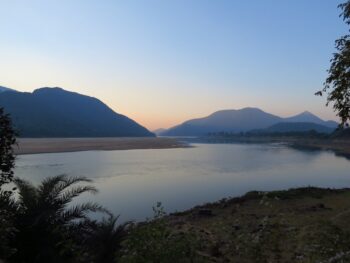
The Mahanadi River runs for over 500 miles from Central Eastern India, through the state of Odisha, and eventually out to the Bay of Bengal. The river gets its name from the Sanskrit words for great and river. The Mahanadi River historically faced massive flooding, but today suffers primarily from the threats of climate change, pollution, and a lack of enforcement.
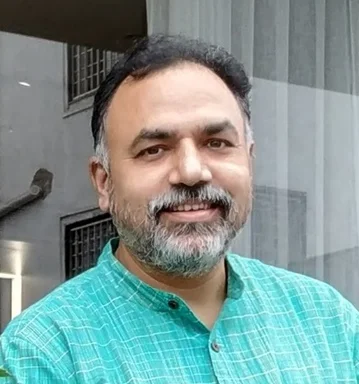
Ranjan Panda is the Mahanadi River Waterkeeper in India. As a child, Ranjan remembers plunging into the Mahanadi River without any fear or apprehension. Now, as an adult, Ranjan lives on the banks of the river and continues to experience it on a daily basis. As a result, he knows all too well about the dangers lurking beneath the surface.
Instead of fretting over the situation, Ranjan has spent his life advocating for the waterbody of his youth. Suffice to say he has earned his nickname, “The Waterman of Odisha.” Ranjan began conserving water at a time when environmentalism was not a mainstream political or civic issue. Ranjan was particularly worried about the once agriculturally prosperous landscapes now turned arid and parched. He formed a voluntary organization to revive waterbodies and bring back economically viable, rural farms. In 2013, Ranjan and Mahanadi River Waterkeeper formally joined Waterkeeper Alliance.
“When I got to know about this global Waterkeeper Alliance movement, I was super excited to be part of it and work in cooperation with so many great Waterkeepers from across the world to be able to conserve my own waterways,” says Ranjan. “It has been a great experience so far with possibilities of mutual learning and actions emerging over the years.”
However, it has not always been easy. The river is huge. Ranjan’s jurisdiction includes over 13 million people. One major hurdle is that rivers are generally seen as utilities. Talking about ecology and conservation can be difficult. However, there are still plenty of engaged and concerned citizens.
“I don’t consider rivers as merely a natural resource,” says Ranjan. “Rather I value rivers as a part of my life. That has also been the prime guiding principle for my work. I have been working to make people realize the fact that the river lives as a part of the society and is an interconnected common rather than just a pipeline or canal.”
Ranjan’s work is paying off. In 2025, he received the Odisha Leadership Award for his contributions to the cause of water conservation, efficiency and climate actions. The president of India named Ranjan an inaugural “Green Hero.” His TEDx Talk on ‘Balncing Modern Progress With River Ecology” has over 44 million views. Ranjan is continuously asked to speak at universities and conferences all over the world. Though, his greatest accomplishment might arguably include his work with the younger generations.
Since March 2019, Ranjan has been working with youths on water and climate change. This campaign, that he founded, is called the #Youth4WaterIndia and has been successfully running several initiatives such as the ‘Plastic-Free Picnic Challenge’, ‘Nature’s Classroom’, ‘Water & Climate Academy’, ‘Young Climate Journalists Support Programme on Climate Change’, and many more. In these efforts he has been successfully garnering partnership of about 100 organizations from across the world including government agencies from India, NGOs and many others. The Plastic-Free Picnic Challenge campaign, for example, has already reached more than one million people across the country through booth online and offline activities.
Ranjan also helped coordinate a “Youth Manifesto on Climate Change, Migration, and Displacemen” aimed at changing the national discourse on environmentalism. More than 100 youths from across India were involved in the process.
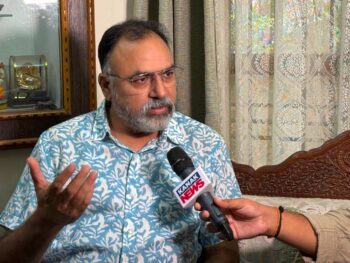 “The greatest hope I find is in the youths who are getting engaged with our campaigns,” says Ranjan. “As part of our youth engagement we are promoting a ‘Youth4Water-India’ campaign through which we are trying to restore the broken relationship between youth and their rivers.”
Ranjan was not trained to be a water scientist. Rather he studied sociology. Though perhaps it is that unique approach to water, as a necessary component of a healthy society, that has led to his success. Ranjan utilizes his academic background by writing for multiple publications on his work. In 2022, he wrote about the pervasive threat of plastic pollution in the food cycle. Last year, he wrote this piece connecting mental health with water justice. No matter what Ranjan is working on, it is always in service of the Mahanadi River and those who rely on it.
“In my opinion, building a close and loving relationship and bond with rivers is very important if we want to conserve the rivers,” says Ranjan. “I want society to understand this, and start changing their behaviors and perceptions about rivers. I want them to get engaged in our campaigns in nature and motivate people in making simple changes in their daily lives and patterns of actions to be able to be better river stewards.”
If you want to support Ranjan in his work in any way, please connect with him at [email protected] or [email protected].