
Who Is Waterkeeper: Elizabeth Ramirez, Cartagena Waterkeeper
By: Thomas Hynes
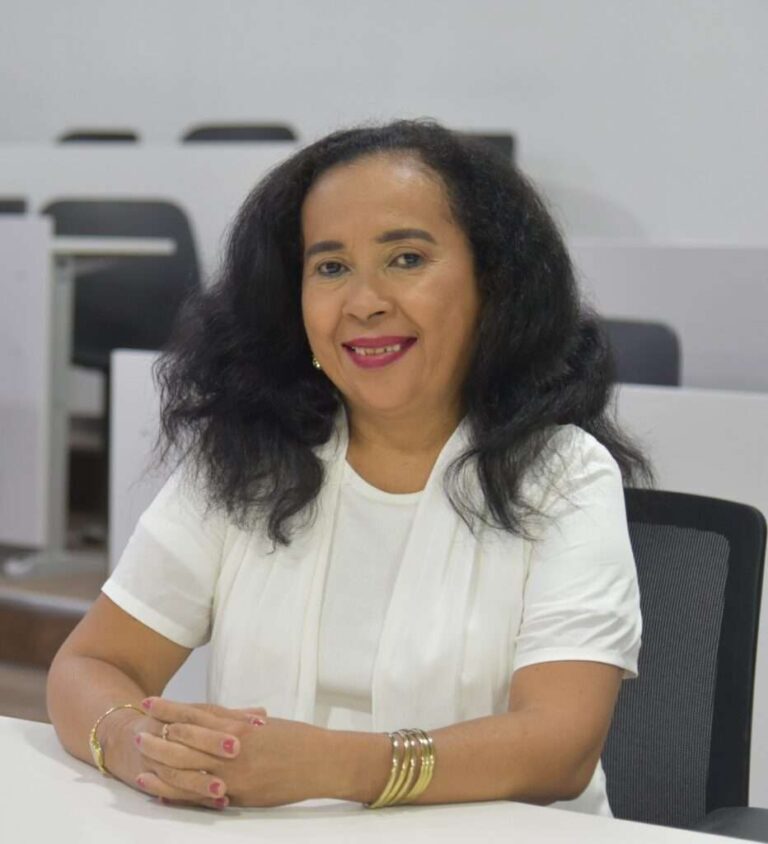
The parent organization for Cartagena Waterkeeper began in 2001 as an initiative composed of marine biologists. A few years later, they opted to expand their mission by joining Waterkeeper Alliance. As part of this process, the group recruited a local lawyer, Elizabeth Ramirez, to helm the organization in its new iteration. For Elizabeth, it was the culmination of a personal and professional journey marked by a commitment to socio-environmental justice, and the conviction that water is a fundamental right that belongs to everyone.
“Becoming a Waterkeeper was not a decision. It was a calling that emerged from my own story and from the deep relationship I have built over the years with the territories, the communities, and the water that sustains our lives. Being a Waterkeeper means for me to be a bridge between science and citizenship, between law and nature, between the local and the global,” says Elizabeth. “It was an opportunity to give a voice to riverside communities, fishermen, and young people who understand that protecting water means protecting life and the future.”
Cartagena Waterkeeper’s jurisdiction includes Cartagena Bay, as well as the Ciénaga de la Virgen, a vital mangrove wetland north of Cartagena, Colombia, a city of about a million people. The bay was once home to a robust fishing industry, home to one of the few ecosystems of Colombia’s Caribbean coast suitable for anadromous fish, species that live in both freshwater and saltwater. However, decades of untreated sewage have devastated the stocks of salmon, smelt, shad, and striped bass that once called the bay home. Industrialization and urbanization have also negatively impacted local waters. However, Elizabeth is not solely motivated by the protection of wildlife. Instead, she is focused on the connection between healthy waterways and healthy communities. 
“On my first encounters with coastal and rural communities, I understood that the relationship with water is not only an ecological issue, but also a profoundly social, cultural, and legal one. Without clean water and healthy ecosystems, there is no possibility of a dignified life or equitable development,” says Elizabeth. “These are more than geographic spaces. They are territories that sustain livelihoods, identities, memories, and collective dreams. Every time I witnessed how pollution, inequality, and neglect harmed these waters, I felt that the human fabric that depends on them was being wounded as well.”
In addition to being an attorney, Elizabeth also served as a professor at two universities in Cartagena, as well as a judge in Colombia’s judicial system. This academic and legal background has been a perfect combination for her work as a Waterkeeper. For example, in 2009, Elizabeth filed the first class-action lawsuit against the city of Cartagena for improper and insufficient waste management.
Though her achievements extend far beyond the courtroom. Elizabeth has helped strengthen community water defense processes by supporting fishermen’s associations and connected academic research with social action by engaging university students in participatory action research projects. She has also designed workshops, booklets, and cultural spaces, such as art exhibitions and youth podcasts, that raise awareness about water as a common good and promote active environmental citizenship.
Elizabeth even encouraged the creation of other Waterkeeper groups. Liliana Guerrero of Bocas de Ceniza Waterkeeper, also in Colombia, credits Elizabeth with inspiring her to join Waterkeeper Alliance in 2010.
 Despite these many achievements, Elizabeth must still contend with many ongoing challenges. These include raising awareness about environmental issues in contexts of high social inequality, where the daily needs of communities, such as employment, security, access to basic services, often overshadow the defense of water and ecosystems. There is also the lack of coordination between public institutions and community stakeholders, which hinders the sustainable management of rivers, bays, and marshes. She has also had to face political and economic pressures stemming from extractive interests or unsustainable development projects, which put both the region and the autonomy of local communities at risk.
Nevertheless, she remains hopeful, optimistic, and enthusiastic about the trajectory of this work. She wants to see the waterways and associated ecosystems recover their natural balance and once again become a source of life, sustenance, and culture for the communities. She dreams of rivers and marshes free of pollution, with clean waters that sustain fishing, biodiversity, and the ancestral practices that are part of the identity of our territory.
As for the community, she hopes for an inclusive and sustainable development model, where fishing families, farmers, and young people are not seen as passive beneficiaries, but as protagonists and guardians of the water. 
Looking out across the global stage, Elizabeth hopes this local effort will reach global levels, that the experience will be an example of how it is possible to harmonize social justice, environmental protection, and human dignity. She hopes it will inspire other territories to raise their voices in defense of water as a common good of humanity.
“Being a member of Waterkeeper Alliance has helped me in a truly transformative way, both personally and professionally. It has shown me that my work is not isolated, but part of a global movement of water defenders who share the same principles of justice, protection, and environmental dignity,” says Elizabeth. “Knowing that I am not alone, that hundreds of Waterkeepers around the world face similar challenges and work with passion for their territories, strengthens my conviction and my hope.”