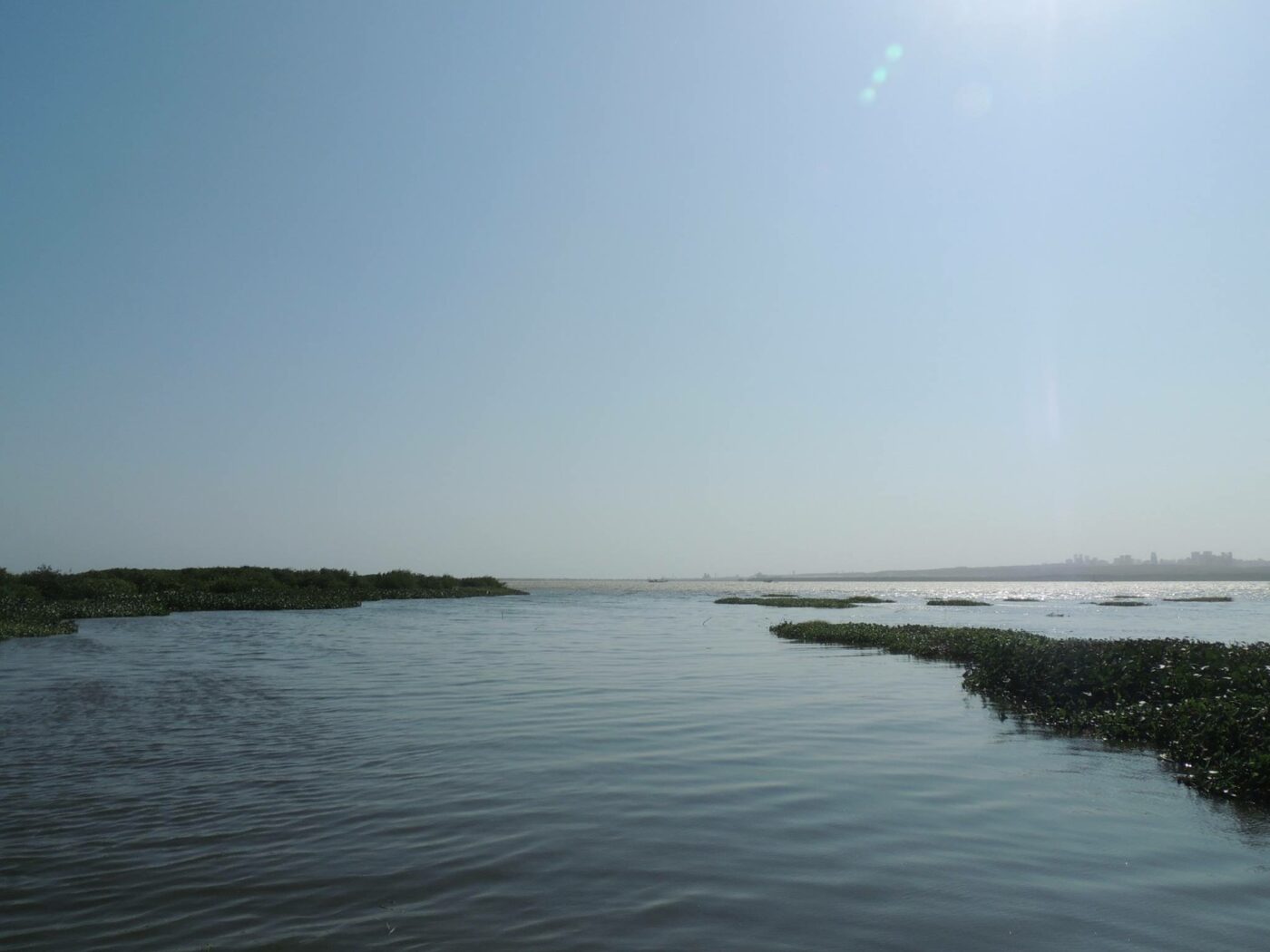
Bocas de Ceniza Waterkeeper protects one of the Colombia's most important watersheds.

Bocas de Ceniza—meaning ash mouth—is the name given to the point where the Magdalena River meets the Caribbean Sea in northeast Colombia. The name reflects the ashy, dusky hue that the ocean’s waters take on upon receiving the river’s sediment-laden flow.

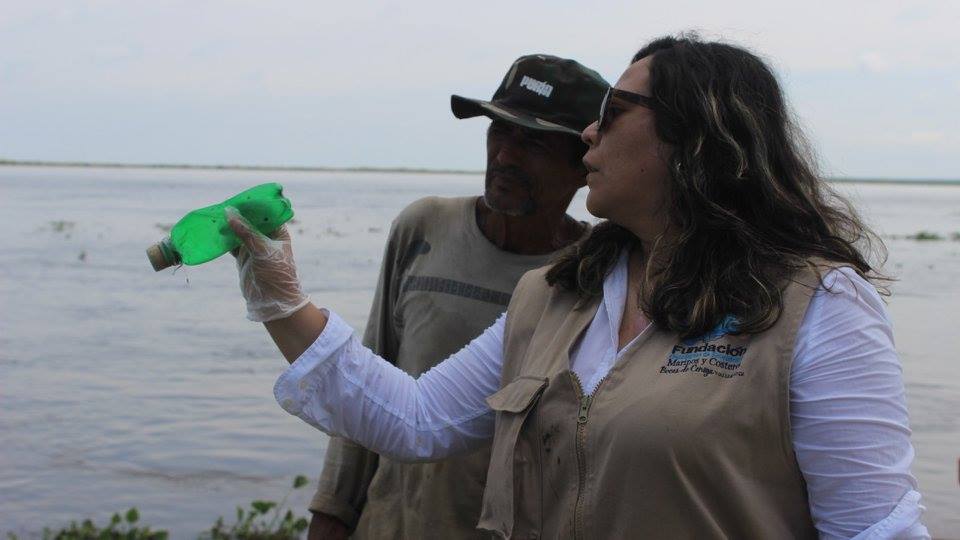
This estuarine–delta system forms a critical transitional zone between terrestrial and marine environments, and underpins the productivity of Colombia’s Caribbean coast. It funnels pollutants—untreated domestic and industrial wastewater, agricultural and livestock runoff rich in nutrients, and plastic and solid waste—from the entire Magdalena Basin into coastal waters, posing a systemic threat to biodiversity and local communities.

The figures cited here come from a comprehensive study by Gallo‑Vélez et al. (2022), which estimated daily pollutant loads in the lower Magdalena sub-basins. Domestic and industrial wastewater contribute approximately 5.10 tonnes/day and 98.43 tonnes/day of BOD, respectively. Agricultural and livestock activities add 14.84 t/day of nitrogen (agriculture) and 48.99 t/day (livestock), as well as 5.90 t/day and 19.46 t/day of phosphorus. Additionally, uncollected solid waste—in the DtM‑LM basin alone—amounts to 22,686 t/year, pointing toward serious accumulation issues.

At the Ciénaga de Mallorquín, where the Magdalena River, the Caribbean Sea, and the wetland converge in northern Barranquilla, these pressures manifest acutely. Historically modified by hydraulic works since the 1930s, the wetland has been used as a sewage basin and suffers from elevated pollution and sedimentation. Moreover, marine litter and solid waste are accumulating within the mangrove forests—notably plastics and other debris that degrade this irreplaceable ecosystem and threaten both its natural functions and the communities depending on them.

Your support is critical. By strengthening our citizen-led water quality monitoring program and boosting our ability to assist fishing communities, you can help:

  • Provide real-time environmental data to empower communities in advocating for clean water and effective enforcement.
  • Offer technical assistance and resources to safeguard livelihoods and restore ecological health.
  • Elevate local voices in policy-making and conservation efforts.

Together, we can protect this extraordinary estuarine system—and the communities and ecosystems that depend on its health—from mounting threats.