
Who Is Waterkeeper: Dean Naujoks, Potomac Riverkeeper
By: Thomas Hynes
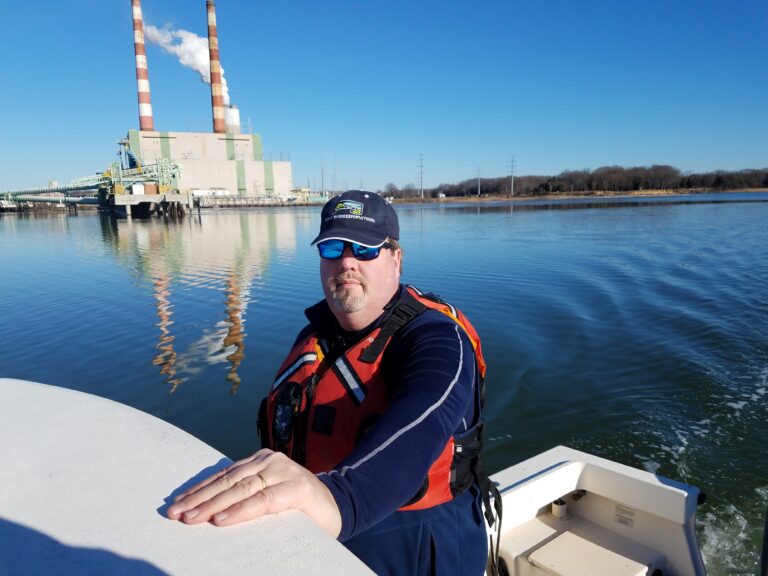
Potomac Riverkeeper Dean Naujoks has spent decades working to protect the environment. After graduating from North Carolina State University with a self-created degree in Environmental Policy and Sustainable Development, he began his career with the North Carolina Wildlife Federation. His path soon led him to water advocacy, where he met his mentor, the late Rick Dove, the first Neuse Riverkeeper and one of the founders of Waterkeeper Alliance.
He credits Rick with encouraging him to become the first Upper Neuse Riverkeeper in North Carolina, and later the Yadkin Riverkeeper. Dean eventually moved north to join the Potomac Riverkeeper Network in the Washington, D.C., metropolitan area, where he took on the role of Potomac Riverkeeper more than a decade ago.
Dean brought years of being a Waterkeeper with him, but he didn’t know the Potomac River all that well. So he did what Waterkeepers do: he got in the water. Over the course of three weeks, he paddled the entire length of the roughly 308 mile-long river. There was a lot to learn.
“Once you become a riverkeeper, you love all rivers. They all need special protections and advocates,” says Dean. “This job is about learning how people use the river, and ways to engage people and connect them to the river.”
The river flows through West Virginia, Maryland, Virginia, and the District of Columbia, passing Georgetown, the Kennedy Center, and the Lincoln Memorial. Dean learned that the Potomac’s story runs much deeper than its famous landmarks. His jurisdiction begins in Harpers Ferry, W.V., near the Shenandoah River, and stretches through the whitewater rapids of Mather Gorge all the way to the Chesapeake Bay. Along the way, the river has supported communities for generations, including Native American settlements, historic homes, and communities connected to Civil War battlefields that still tell the story of the region.
Today, Dean’s watershed is home to about five million people, which puts tremendous pressure on the river and surrounding watershed.
“We have done a lot to clean up the river,” says Dean. “But the emerging stuff, like PFAS and microplastics, I would not have thought was a big deal five or ten years ago. But I’ve come around. This role requires constant vigilance. There are always new and emerging threats to the river. It is never a safe space where your job is done. There’s always going to be new things to work on and protect your waterway.”
One of those new things for Dean to work on happened in early 2026. On January 19, a ruptured interceptor pipe in Maryland, just upstream from D.C., sent hundreds of millions of gallons of raw, untreated human waste into the Potomac River. It resulted in one of the largest recorded sewage spills in American history. Making matters worse was an extremely cold winter, which froze significant portions of the untreated spill.
This frozen ball of contaminated water was a massive headache for the D.C. area, but it also became comedy material. Former CBS Late Show host Stephen Colbert highlighted the crisis during his nightly monologue, including mispronouncing Dean’s last name and turning it into a punchline.
A nationally televised shoutout for Dean and Potomac Riverkeeper was nice, but all jokes aside, the problem was just beginning. For starters, the disaster received relatively limited media coverage compared with the scale of the event and its potential impact.
The local utility, DC Water, described the spill as being contained while crews were still actively working to contain and control it. Early monitoring was handled by local environmental officials rather than the utility, while Dean saw the U.S. Environmental Protection Agency’s presence as notably absent in the early response.
Once again, Dean did what Waterkeepers do: he took a reporter out on his boat in an effort to raise awareness. He also started doing daily testing, often in below freezing temperatures. He also encouraged local universities to continue sampling and testing, forging a partnership that normally would not exist, and his work will be part of legal actions moving forward.
The situation is another success in Dean’s storied career. He likes to claim he has never lost a lawsuit or a campaign in over 25 years of professional service to the environment. There certainly are a lot of highlights. Dean sued Duke Energy, compelling them to clean up 5 million tons of coal ash. He also sued Dominion Energy, forcing them to clean up 28 million tons of coal ash. He helped pass legislation in three states relating to coal ash, which ensures the waste is encapsulated and recycled into bricks that will be permanently removed from the community.
Dean also helped launch the Duke Environmental Law and Policy Clinic, an institution dedicated to training the next generation of leaders to solve environmental problems and to provide access to justice in underserved communities.
He also maintains an active role in educating the community. Whether it’s in the classroom on land or on a floating science barge he created, Dean’s love for this work is easy to see. He’s also an active participant within the Waterkeeper movement. In speaking with fellow Waterkeepers, Dean stresses the importance of pacing oneself and thinking long term.
Many folks in this line of work, he concedes, burn out after three or four years, yet these campaigns can take twice as long to reach fruition. The work is hard. The hours are long. The stakes could not be higher. It can be stressful. It can be hard to know what to do.
But, as Rick Dove taught Dean, you will always make the right decision if you always do what is right for the river.
Visit Potomac Riverkeeper Network to learn more about Dean’s work and how to support it.