
Equity In Every Drop: Series Two
Episode 6: The Community Cost of Factory Farms
Series two includes six episodes focused on the issues and advocacy priorities of our Pure Farms, Pure Waters campaign.
In this final episode of series two of Equity In Every Drop, host Thomas Hynes speaks with Reverend Jimmy Melvin, senior pastor of Mount Zion Church in Magnolia, North Carolina. With 40 years of pastoral experience, Reverend Melvin shares his transition from ministry to environmental advocacy, driven by the disproportionate impacts of factory farms on his community.
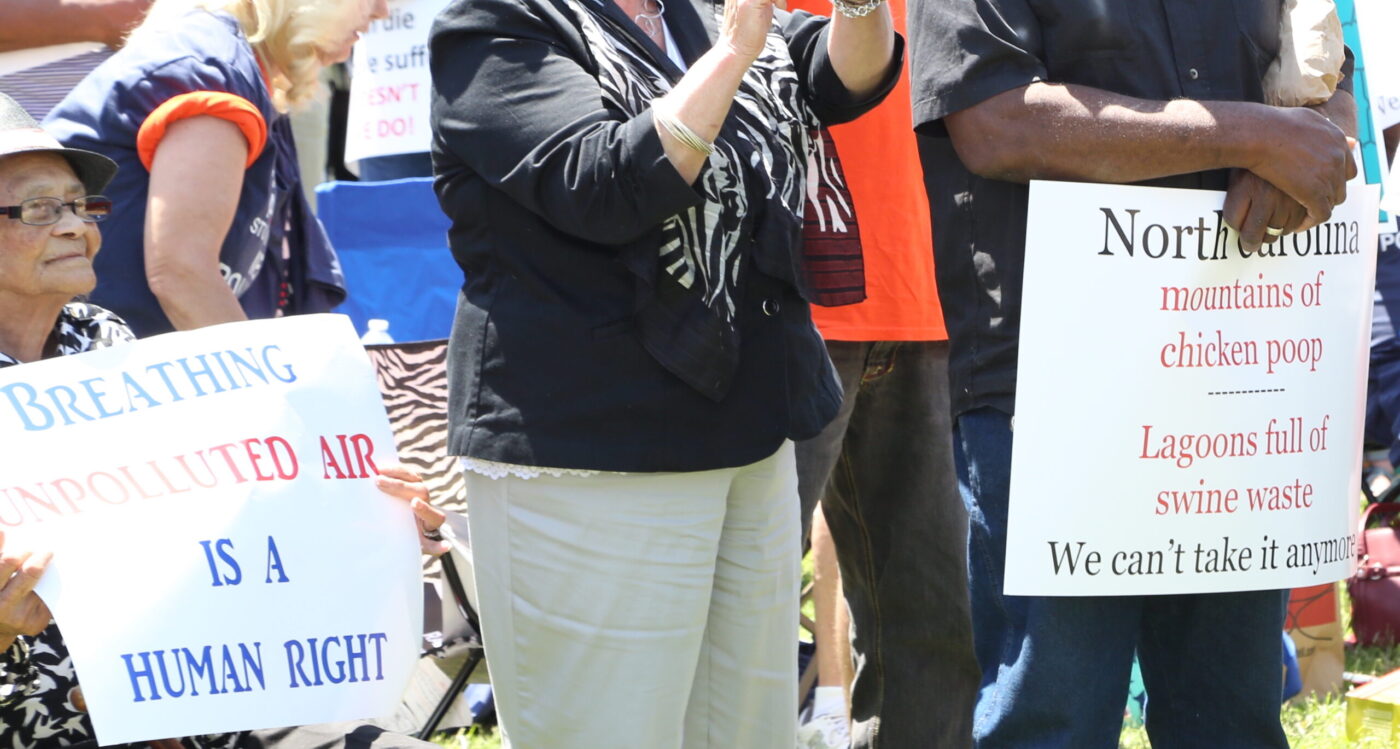
He gives first-hand accounts of the environmental and social toll of concentrated animal feeding operations on adjacent communities, including the pollution of drinking water, adverse health effects, and damage to local ecosystems. Reverend Melvin underscores how these industrial practices endanger the health, livelihoods, and well-being of his neighbors, emphasizing the moral responsibility to protect clean air and water for all.
Through his collaboration with Waterkeeper Alliance, Reverend Melvin demonstrates the transformative power of stewardship, spiritual commitment, and collective action in addressing environmental challenges. He highlights the importance of community engagement, scientific research, and partnerships across various sectors to create sustainable solutions.
This episode explores the intersection of faith and environmental advocacy, showing how spiritual leadership can inspire meaningful change, foster justice, and guide efforts toward sustainable community development.
To learn more about Waterkeeper Alliance’s work in North Carolina, read this blog post.
Stay tuned! New monthly episodes will be posted here and anywhere you get your podcasts. Click “Subscribe” in the episode widget above to access links to popular podcast apps.
Thank you for listening, sharing, and supporting our mission to ensure everyone’s right to clean water. Together, we demand equity in every drop.
Waterkeeper S2, Ep6 – The Community Cost of Factory Farms
Thomas Hynes: My guest today is Reverend Jimmy Melvin. Reverend Melvin is the senior pastor of Mount Zion Church in Magnolia, North Carolina. In Reverend Melvin’s 40-year pastoral ministry, he has served churches in Sampson, Pender, and Bladon counties. He recently began working with Waterkeeper Alliance to raise awareness about the water pollution problems affecting North Carolina’s communities.
Reverend Melvin, thank you so much for being here today.
Reverend Melvin: I’m happy to be here today. Thank you for the opportunity to be engaged with this, at this level, this year.
Thomas Hynes: Yeah. Well, we’re very excited to have you, and we’ve met here through the podcast, but working here at Waterkeeper Alliance have been very aware of your work and your contributions to this movement, and we’re all very excited to have you on the podcast today.
You know, we were talking before we started recording, and you know, earlier in this series we’ve been talking a lot about concentrated animal feeding operations or CAFOs or factory farms, if you don’t work in this industry that’s probably the more layman term for it, and a lot of our guests have come to us from the policy side and have come to us from the health impact side and sending some water quality management sides. But what I’m interested in, you know, that’s not really your background. And I think that’s a really valuable and important perspective.
So, tell me a little bit about yourself, and if you can, why you decided to get involved with environmental issues?
Reverend Melvin: I graduated high school, went to college for a year; then we were employed by the Goodyear tire and rubber company for 30 years, and retired. In the meantime, half of those years, maybe 10 to 15 years, I was a bi-vocational pastor.
And then from that point, at the age of 49, I became where I was a community person and had the opportunity to work with communities, and that was in Bladen County, and they mentored me and given me the opportunity to participate. And be a part of their environmental problems and communicating with the representatives, with the commissioners, but I had an awesome opportunity to exercise and just to get to know how things work and get a better understanding of government, and being engaged, and the necessity of having everybody engaged and coming to solutions and solving problems.
On that point, any opportunity with problem solving and things, I volunteered because of the opportunity to learn and expand. And so that began a process of that problem solving has been, I think, the most valuable thing and being able to engage people and respect what they have to offer and keep what’s important, the cause in front of us.
And it was an awesome journey of just seeing how the wealth of gifting and knowledge that people had in the different perspectives from the strength and what their position was. It was amazing. So this was a welcome challenge to employ this on a different level.
So this is where I’m at today and this has got me in front of you. That was some preparation that I was able to, because I guess my gift of desire, it was an opportunity to learn and continue to reinvent myself and develop.
Thomas Hynes: I mean, it’s certainly a reinvention and there’s certainly a problem here.
Right. So let’s talk a little bit about, I’ll take us a little bit off the script a little bit, but we’ll get to everything because this notion of problem solving and your interest or your passion and your, and your willingness. And just, it sounds like you’re, and it can just kind of sense your energy to go at these problems.
Tell me about problems that these hog farms are causing for communities near where you live.
Reverend Melvin: Well, the very first thing in being introduced to the hog farms was the odor.
Thomas Hynes: Right? The smell of money.
Reverend Melvin: We were accustomed to, in the rural setting, the culture says when the weathers begin to set to rain, you could detect it by the scent of a small hog farm. Smell the hog pen, gonna get some rain. Well that was normal to smell that. But when the industry came in, and the large hog farms, then that was not just when it rained, but the odor became consistent. When you went out, you smelled it. But at first, it was individual farmers who may have had a commercial hog farm that had maybe a hundred hogs in it. That he operated, him and his son operated.
But then when everything’s shifted and the commercialization came. And those 100 hogs became a thousand hogs or a million hogs. Then I really feel, that hindsight is always 20/20, that EPA standards for that did not match to demand of the management. And we got behind the curve and in that, we lost ground and we’re now trying to recover. We’re trying to recover that, so there’s some sense on the citizens’ part that we just did not be proactive and we could debate for the rest of our lives, but we have a cause at hand, and so the invitation is to be engaged.
Along with the EPA with the government, our local, so it is– we all still like bacon, I ate some this morning, I’m not mad with the hog and if you know, if somebody’s having a barbecue the weekend, it’s a barbecue. So I always share it. I’m not mad with the barbecue, but let’s get the issue in hand and that is a quality of life.
And you know, we have to be responsible for the quality of life for everybody.
Thomas Hynes: Right, and that data point that even as you just said. You said, well, it used to smell it with certain weather, and now you smell it all the time. Like, that’s a real, that’s a real impact. And that’s, you know, I want to talk a little bit about, you know, again, we’re going to get to this question later, but it’s just kind of on my mind now.
What does that impact have on a community that – I mean I can guess, but that it’s not great – but that industry and that government is allowing for something, which is basically, you know, a nuisance, not even getting into all the health impacts and the water impacts and everything else, but just that immediate visceral smell. So okay, your community can have this, we’re okay with this with foisting this on you. How does that impact people in your neighborhood, in your counties, in your towns?
Reverend Melvin: There was a common bond, but that began to bring friction on that– the commercialization of it– and in the end what was gained began to be superior over being heard, and that began a way on our rural culture and our togetherness and opportunity. So it caught us at a point that we weren’t prepared to collaborate.
Keep what’s important, important, along with the progress that were being made. Our nation became more industrial, and our rural areas now begin to be, that begin to be a great source. We eliminated the tobacco for a period of time. And so, that began to be pushed forward to the thing, and with that became, uh, commercialized meals and things that help assist that. So it became a leading economical arm, but that did not address the problem.
Thomas Hynes: Right.
Reverend Melvin: So it was made easier to divide it and conquer. And so, you know, the financial side of it spoke more relevant to addressing a problem, and to those that were in power to make decisions than just the average taxpayer. So, that was what was exciting to me, to have the opportunity to be engaged has always been there, but that force it sort of programmed people and then I don’t matter.
Thomas Hynes: Yeah, you would feel like that if your community was overrun with this industry that was ramping up suddenly and impacting you every day, regardless of the weather. As you said earlier, and what’s so interesting to me too is, that you have such a considerate and balanced view of the situation because you’re not just here saying like, how these things are a scourge we got to get rid of them. And you’re like, hey, I ate bacon this morning and I would gladly attend a barbecue. And these people need jobs too, right? I mean, people need to work, and that’s not a trap or a conundrum or whatever–but it’s a delicate situation. And what good is you know, yeah, it’s a very nuanced, and considerate take. And it’s easy to lose sight of that. This is people’s livelihoods, not just their drinking water and their air. I mean, ideally, we could find some kind of balance where this works for everyone. You grew up on a farm?
Reverend Melvin: Yes, I grew up on a farm. My father had about 35 or 40 acres. We grew up on the farm. We raised hogs and he was a logging contractor. That’s what gave me a love for the cause we were swamp log we were around creeks. So we had the opportunity to visit places in the swamps and just see the natural beauty of it.
Thomas Hynes: What, how have you seen that change in the last 10 or 15 years, or has it changed?
Reverend Melvin: It really affected the ecosystem and our Eastern North Carolina, there’s no hills. We have just a little high, a little few high slopes, but our streams and our rivers, this is a pastime. I’m 45, I’m 60 by 63 or 4 miles from the coast in Wimbledon. Some people on our major Black River that runs in and Cape Fear, some people have their boat. They make the commute on the weekend. They want to go out. They have a little port there at the house off the river, and then a group of them just ride down to Wimbledon. I mean and the fishing, but now our smaller streams, our tributary rivers, where we used to cut hardwood timber [to] thin it out, that now is because of the pollution and that spinoff, over phosphorate and nitrogen, we first thought it was the beavers because there was normally the beavers, but now you see broad swamps with no trees.
Thomas Hynes: Yeah.
Reverend Melvin: Now that’s not there anymore. That’s not the same.
Thomas Hynes: We think about the effects on human health and on wildlife and I had never thought about it. Of course, it would impact trees and fauna and things like that because it’s all connected.
And I want to come back to your work as a minister. And you know, because like I said in the beginning, like, it’s so interesting to me to talk to you for a number of reasons. But for this series and this issue in particular, you know, we talked to people who are public health experts and professors and lawyers and Waterkeepers and this, that, and the other thing, but tell me about the correlation between being a minister and then being an environmental steward.
I think I can guess what you’re going to say, and how these two are connected, but I’m very interested to hear from you how these two are connected and how are they connected? How did you go from one to the other?
Reverend Melvin: Yeah, they’re connected because you know, we’ve been entrusted to be good stewards, and we are actually our brother’s keeper. You know, there’s got to be a common cause, the thread that holds us all together, regardless of race, creed, or color. And those two things are water and air, so in that, it now to keep focused on the humanity issue.
My father–who was, you talking about being engaged, and for the greater good of humanity, and our community and he worked across the lines and, for the greater good – instilled that in us that you don’t let your differences get between being community.
And we have a right to our positions, but we hold accountable each other for the greater good of everybody. That has, it’s not worked well in places, but it’s been a stable to me. And in this situation, we now don’t waste time blaming who did what, who did what. We all watched it. We all were here voting citizens.We were all part of it. We watched it happen.
Thomas Hynes: And I just want to go back to something else–just to commend you on the way that you’re talking about this issue– there’s such a difference. There’s such a clarity when I listened to you speak between you’re not pointing blame at anybody. You’re just looking to solve the problem. And I think that’s the thing that I keep coming back to when I hear you speak. This is not about well you did this wrong, and you’re eating too much bacon, and there’s not like a finger pointing exercise. This is a problem solving exercise for you.
And I think that really comes through. And I think that’s very valuable because it is very easy when we hear about this issue or any issue to demonize, and to not get the other person’s perspectives, and to not take in the full picture and say, no, I know I’m right, and I know they’re wrong.
That’s very easy, you know. In any venue of my life, I can see that being very appealing, but it’s not really going to get us anywhere towards the solution. Is that, I mean, this seems to be very deliberate on your behalf or is this, it’s just the way you are.
It seems to be, you know, an effective way to go about dealing with this issue and probably every issue.
Reverend Melvin: And I’ve had opportunity. Tom [Butler – a local farmer] has brought college students and professors and one of the guys, he was working with Tom and he was prepared to retire.
I asked them, “How does this, what you see here?” And they’d already had a tour. “Were raised there, in the culture we’re in, how does it compare with this? Can you relate to this? Is this similar?” And there might be one that the demographics might’ve been the same, but none could. They said it’s nothing like they’d ever imagined.
And then in essence they finally get comfortable and we get engaged. And they said, “how do people live like this?” You know, but it had an opportunity to keep the cause before them and the seriousness of it and relay what the battle is, being engaged and finding common ground that’s here now, and dealing with the here and now.
Thomas Hynes: So I just want to say on what you had just said about working with something to make a difference, to have that passion, you know, on the flip side of it, I just– I don’t know– I feel like I’ve worked, in this space for a few years and I’ve worked outside of this space in things that I’m not passionate about.
And while it does take more energy and more determination to work in things that are important, it’s more fulfilling too, and I know this is sort of an aside, but as daunting and as hard as this work can be, I still think it’s better than working at something that you don’t care about.
So it’s a gift in a lot of ways. So I think that we’ve covered a lot here and I want to just talk to you a little bit more about, you know, we’ve talked about the way the landscape has changed and the way that the industry has changed and how this has impacted the community and your role in this and your journey to this.
And we’ve said a few times that– well my takeaway anyways– that a lot of the things that I keep hearing are problem solving. So with that in mind, what can the community do about this problem? How can this problem be solved in your opinion?
Reverend Melvin: They have to organize. Our community has organized and we engage. We basically had someone come to do a presentation last night from one of the agencies, but we’re trying to educate, trying to make sure we understand because now our voice has been heard by our governmental leaders who were elected by the people for the people. So we need to be intelligent. We need to be purposeful and continue to be consistent with that information, and so we’re in the information age, we have access to so much more than we did.
There’s so much more research, and so we are having an opportunity to have testings, to have our water tested, to do studies on the potential of clean water, being proactive rep people visiting the Capitol. We’ve had more people, our senators and representatives have open door policies, so our rural people get together and they drive up and they go visit them.
So we are birthing a more informed culture where, if something like this with the potential to explode the way it is, it would be difficult to do that without bringing scientific information, showing that you took this in mind, you took that in mind, you took this in mind.
Because in just this past year, a group of young people, young parents, all children, warded off an environmental issue that a company was going to move in with, and had the potential to do the same thing, and they based it on research. They took the present research that was now available and those senators and representatives put that company to stepping and they called itself a young group. And the age limit, they were just getting kids into elementary school. But they’re concerned because of what we’ve done, exposing the environmental issues, they thought and processed in a different way, even though at the present time, it didn’t affect them.
But the foresight they had, I thought that was wonderful. But they did it because the research that was available, it couldn’t be denied and being proactive. So I see so many great things that’s coming out of this.
Thomas Hynes: Yeah, for sure. And so I guess maybe we already asked this question, but I kind of want to get your point of view on this. How do you see this problem being solved? I mean, what would you like to see if you could solve it. If you could, I hate to say this all the time and it’s so silly, wave a magic wand, what is this balance? How would you like to see your community interact with this industry? Do you want to see them interact at all? What’s the right way forward?
Reverend Melvin: I think we have a great opportunity to completely change the culture within our industry, and our government, and the greater good of everybody.
Clean water solves the major problem. It solves the major problem. The air management, we have the capability and the technology. The emphasis put there, that can be managed, but here again, we waste a lot of time bringing that to the forefront and discovering and presenting information, bringing solutions.
And I had an older minister who used to always say in our meetings, “you can’t solve the problem if you’re a part of the problem,” and so if being ignorant or not being informed, then you can’t solve the problem if you’re a part of it and not knowing. And in life, you and I, and everybody, as we’re here at the point where the things where we kept crashing, messed up with the call of fear and human error, and that is not knowing what you need to know before you need to know it.
And so we have a great opportunity with exposure and what I see. Just what I heard in our community meeting last night as they address the environmental person that came in from three years ago– which is normally me speaking or the president speaking– they address the commissioners.
One of the little quiet ladies made an intelligent presentation to the commissioners. Another guy – I was unable to go – they made a beautiful intelligent presentation, knowledgeable and reminded them we’re here because we’re concerned and we want to be a part of the solution.
And we believe you’re just as interested as we are in solving this problem. I thought that was amazing, for them to challenge them in that way. But now two years ago, they had to start getting police in there because it was getting rough, people would express and they would get mad, and it would get ugly, but now people have gotten so much they can present it so intelligently that it really puts pressure on the leadership because they are speaking intelligent, they’re telling facts, they’re speaking from research. So we are birthing an intelligence that’s going to demand different leadership, with the research that is being made, that God is going to provide someone with the insight and the willingness that our government will partner with them so that we can continue to create a better union, a better nation or whatever.
Thomas Hynes: It’s like, hey, the science is irrefutable. And it is speaking to all of us in a lot of ways, and we need to listen, and we need to do something about it and solve this problem.
Reverend Melvin: And one of the things I said, 28 years, I was in a county where I had the opportunity to be engaged, and be involved, and help solve problems, lead across denominational lines, and when I left that year, I moved this way. And so I embraced the opportunity here, not knowing that that’s what I was going to run into. A well that was contaminated and we had to spend money, go down 225 feet to get our well straightened out. And they had been having a water test, but it was a completely new culture that I introduced, and had the opportunity to introduce my people to. We’ve had people come in and do movies in the church and interviews.
And they say, “well, can we speak to the people,?” I said, “I’m telling you after this morning, I don’t know, they may run home.” Amazingly, 18 people stayed and they put that microphone on the long arm, put the chairs in a horseshoe shape in the cafeteria, and they shared stuff that brought tears to my eyes.
Thomas Hynes: Yeah, I’m sure. It is this issue that is beyond the science and the law that it is impacting real people’s lives and real people’s communities. And talking about the word appreciation, I mean, I greatly appreciate you being here and sharing your insights perspective on that.
Reverend Melvin: One thing I would say is I’m appreciative to the entities that are taking the opportunity to use whatever venue they have to be in collaboration and the passion. I’ve met people. People have flew in from France. I did interviews with people from all over, but that was so encouraging.
And I’ve done more research on what other countries are doing about the environment. I had a granddaughter that spent, she’s graduated from NYU in New York in movies and stuff, and she went to Prague, and I wanted her to make sure she told me about what she learned about.
And she had an opportunity to travel and she said, “Oh my God, they’re so much more conscious in the environment than we are.” And so that was, you know, that was reinforcing, so it is a humanity issue. And I believe that God is favoring our efforts, and that you know, there’s purpose in what we’re doing.
Thomas Hynes: Amen to that. And I think you really touched on another really great point, and what it reminds me of a sort of this paradigm is that I think, with a lot of issues– and it can be environmental, it could be political– there’s loads of these problems that I think the biggest problem is not a lack of empathy or a lack of caring, it’s people don’t know, they don’t know that the bacon on their table is causing this problem, they don’t know that their car is polluting.
So you being here today and speaking with us and the work that the Waterkeepers do out there – and all these great advocates, and Jamie Berger, the filmmaker, and everybody else who’s working on this issue – raising that awareness is going to, I hope, activate people’s goodness and empathy and caring.
How change will be made, but it can’t happen if people don’t know what the problem is. And this is one of the first steps in that.
Reverend Melvin: And they had spinned their wheels for years knowing what they smelled, but didn’t have the process, and one of the older doctors always would hear him say, “the governor will not listen, research is what they listen to.” He would say that. And boy, they would beat him down. “Can’t you smell it?”
I remember that so hard that he would say that. And so as the research begin to take place with the water and the environment with the hogs in the rules area, the water testing gave them, put legs under them, put feet under them, after all the noise as if they were sitting in a wheelchair and watching the news and talking about it, but they have gained and made it awesome and it’s all tied together because it’s environmental.
And so we’re seeing that being engaged, and the approach together it’s really demanding the attention of the leadership of our state. And it’s really demanding that it will be something that every person elected will have to get accustomed to and deal with.
It’s not going away. People are now have the understanding and how to present it and the research is becoming more and more available. And so it is, it will be a part of the culture. It’s actually changing the culture.
Thomas Hynes: Yeah, absolutely. Well, Reverend Melvin, thank you so much for being here today.
It was great to speak with you again. And I know that our listeners wherever they are in the world from North Carolina to Prague, are thanking you as well.
Reverend Melvin: God bless you. Thank you for the opportunity to share and be a part of it.